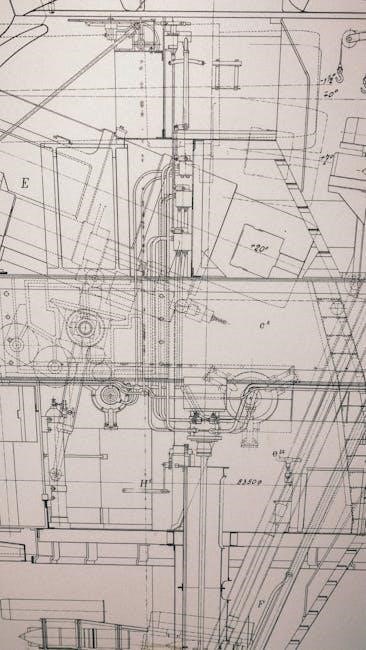
What is a Full Set of Construction Documents PDF?

Construction documentation review packages utilize checklists to ensure completeness; these documents detail building design, code analysis, and compliance for final approval.
Definition and Purpose
A full set of construction documents, often delivered as a PDF, represents a comprehensive collection of drawings, specifications, and supporting information crucial for building projects. These documents define the complete scope of work, detailing everything from architectural design and structural engineering to mechanical, electrical, and plumbing systems.
Their primary purpose is to provide a clear and unambiguous guide for contractors, subcontractors, and building officials throughout the construction process. They serve as the legal basis for the contract between the owner and the builder, outlining expectations and ensuring accountability. A thorough review, utilizing a construction documentation checklist, verifies accuracy and identifies potential inconsistencies before construction begins, minimizing costly errors and delays. Ultimately, these documents translate design intent into a buildable reality.
Importance in the Construction Process
Complete construction documents, frequently in PDF format, are fundamentally important for a successful project. They facilitate accurate bidding by contractors, enabling precise cost estimations based on a defined scope of work. During construction, these documents act as a constant reference point, resolving on-site questions and ensuring adherence to the design intent.
A robust construction document checklist ensures all necessary elements are present, preventing delays caused by missing information. Furthermore, they are vital for code compliance reviews, verifying adherence to local regulations and safety standards. Properly maintained documents also serve as a record of the project, useful for future maintenance, renovations, or legal purposes. They minimize disputes and promote a streamlined, efficient build.

Components of a Complete Construction Document Set
A full set includes architectural, structural, MEP (mechanical, electrical, plumbing), and civil drawings, alongside specifications, detailing all aspects of the construction project.
Architectural Drawings
Architectural drawings form the core of the construction document set, visually communicating the design intent. These encompass several key components, starting with Site Plans, illustrating the building’s position on the land, including boundaries, easements, and existing structures. Floor Plans depict the layout of each level, showing room dimensions, door and window locations, and built-in features.
Elevations provide exterior views of the building from different angles, showcasing the facade’s appearance and materials. Sections are cut-through views, revealing the internal construction and relationships between different levels. Crucially, Details offer magnified views of specific building components, clarifying construction techniques and material connections. Verifying the accuracy and up-to-date status of these drawings is paramount during review.
Site Plans
Site Plans, a fundamental component within the construction document set, graphically represent the project’s location and its relationship to the surrounding environment. These plans meticulously detail property boundaries, easements, rights-of-way, and existing structures, providing a comprehensive overview of the building’s context. They illustrate proposed landscaping, parking areas, access drives, and utility locations, crucial for understanding site logistics.
Reviewing Site Plans ensures compliance with zoning regulations, setback requirements, and local ordinances. Accurate depiction of topography, drainage patterns, and proposed grading is essential for proper site development. The plan’s clarity directly impacts construction feasibility and minimizes potential conflicts during the building process, making it a critical element for review.
Floor Plans
Floor Plans are arguably the most recognizable element within a complete construction document set, providing a bird’s-eye view of each level of the building. They illustrate room layouts, dimensions, door and window locations, and the arrangement of interior walls. These plans are vital for visualizing the building’s spatial organization and functionality, guiding contractors during the build process.
A thorough review of Floor Plans verifies accuracy in room sizes, adherence to accessibility standards, and proper placement of fixtures and equipment. They demonstrate the flow of movement within the building and confirm compliance with building codes related to egress and occupancy. Discrepancies on floor plans can lead to costly rework, emphasizing their importance in the documentation review.
Elevations
Elevations depict the exterior facades of the building, presenting a flat, two-dimensional representation of what the structure will look like from each side. These drawings showcase exterior materials, window and door styles, rooflines, and overall architectural features. They are crucial for understanding the building’s aesthetic appearance and ensuring consistency with the design intent.
Reviewing Elevations confirms the correct placement of exterior elements, verifies material specifications, and ensures compliance with zoning regulations regarding height and setbacks. Accurate elevations are essential for contractors to properly install siding, roofing, and other exterior finishes. Discrepancies can impact the building’s visual appeal and structural integrity, making thorough verification vital during document review.
Sections
Sections are vertical cuts through the building, revealing the internal construction details. They illustrate relationships between different building components – floors, walls, roofs – and showcase heights, materials, and structural systems. These drawings are vital for understanding how the building is assembled and for coordinating the work of various trades.
During construction document review, Sections are checked for accuracy in depicting wall assemblies, floor structures, and roof details. They confirm proper insulation, fire-rating compliance, and the integration of MEP systems. Contractors rely on sections to accurately build interior spaces and ensure structural integrity. Identifying discrepancies early prevents costly rework and maintains the building’s performance standards.
Details
Details within construction documents are large-scale drawings showcasing specific building components and their connections. They provide precise information on materials, dimensions, and assembly methods, going beyond what’s shown in sections or elevations. These drawings clarify complex junctions – like wall-to-foundation connections, window installations, or roofing systems – ensuring proper construction.
Reviewing Details is crucial during document checks; accuracy prevents errors and ensures watertight, structurally sound assemblies. Contractors use these drawings for precise fabrication and installation. The Construction Documents Checklist emphasizes verifying the up-to-date status of architectural drawings, including these critical details. Proper detailing minimizes risks and guarantees long-term building performance.
Structural Drawings
Structural Drawings are a vital component of a complete construction document set, detailing the building’s load-bearing elements. These plans illustrate the skeleton of the structure, encompassing foundation plans, framing plans, and detailed connections. They define materials – concrete, steel, wood – and their specifications, ensuring the building can withstand anticipated loads and environmental factors.
A thorough review, as outlined in Construction Documentation review packages, focuses on structural integrity. Checks verify compliance with building codes and engineering principles. The checklist confirms the presence of these drawings and assesses their accuracy. Proper structural documentation is paramount for safety and long-term building stability, preventing potential failures.
Foundation Plans
Foundation Plans, integral to Structural Drawings within a full construction document set, meticulously detail the building’s base. These plans illustrate footing dimensions, foundation wall layouts, and reinforcement specifics – crucial for load distribution and stability. They specify concrete mixes, steel rebar sizes, and placement, ensuring the structure’s ability to bear weight and resist settlement.
Review checklists, part of Construction Documentation, verify the accuracy and completeness of these plans. They confirm adherence to geotechnical reports and local building codes. A thorough check ensures proper drainage considerations and appropriate foundation type selection for the soil conditions. Accurate foundation plans are fundamental to preventing structural issues and ensuring long-term building integrity.

Framing Plans
Framing Plans, essential components of Structural Drawings within a comprehensive construction document set, graphically represent the building’s skeletal structure. These plans detail the size, spacing, and connection methods for all framing members – including beams, columns, joists, and rafters. They illustrate load paths and ensure the structural system can withstand anticipated loads, like wind and snow.
A Construction Documents Checklist mandates verification of framing plan accuracy, confirming compliance with building codes and engineering calculations. Reviewers check for proper member sizing, adequate connections, and adherence to fire-resistance ratings. These plans are vital for safe and efficient construction, directly impacting the building’s stability and longevity, and are subject to final approval.
Details of Structural Connections
Details of Structural Connections, crucial within Structural Drawings, provide magnified views illustrating how various structural elements are joined. These detailed drawings specify connection types – bolted, welded, or nailed – and their precise configurations, ensuring load transfer and structural integrity. They’re essential for fabricators and installers, minimizing on-site interpretation and errors.
A thorough Construction Documents Checklist requires verifying these details align with engineering calculations and applicable codes. Reviewers confirm adequate fastener sizes, weld specifications, and bearing plate dimensions. Proper connection detailing is paramount for preventing structural failures; therefore, accuracy is non-negotiable during the final review process, impacting overall building safety.

Mechanical, Electrical, and Plumbing (MEP) Drawings
Mechanical, Electrical, and Plumbing (MEP) Drawings form a vital component of a complete Construction Document Set. These plans detail the building’s essential systems – HVAC, electrical distribution, and plumbing infrastructure. A comprehensive review, as outlined in a Construction Documents Checklist, confirms system layouts, equipment specifications, and adherence to relevant codes.
Verification includes checking for proper duct sizing, electrical panel schedules, and plumbing riser diagrams. MEP coordination is critical to avoid clashes during installation. The final review ensures these systems integrate seamlessly with architectural and structural elements, guaranteeing functionality and safety. Accurate MEP documentation is essential for obtaining permits and ensuring long-term building performance.
HVAC Plans
HVAC Plans, integral to the Construction Document Set, illustrate the heating, ventilation, and air conditioning systems. A thorough Construction Documentation review, guided by a detailed checklist, verifies proper ductwork layout, equipment sizing, and control system schematics. These plans must demonstrate compliance with energy efficiency standards and building codes.
Reviewers confirm adequate airflow calculations, equipment locations, and insulation specifications. Coordination with architectural elements is crucial to avoid conflicts with structural components or ceiling heights. Accurate HVAC documentation ensures optimal thermal comfort, indoor air quality, and energy performance. Proper detailing is essential for successful installation and commissioning of the HVAC system.
Electrical Plans
Electrical Plans, a vital component of complete Construction Documents, detail the building’s power distribution, lighting, and communication systems. A comprehensive Construction Documentation Checklist ensures these plans accurately depict panel schedules, circuit routing, and fixture locations. Reviewers verify adherence to the National Electrical Code (NEC) and local regulations.
The plans must clearly illustrate grounding systems, emergency power provisions, and low-voltage wiring for fire alarms and security systems. Coordination with architectural and structural drawings is essential to avoid conflicts. Accurate electrical documentation facilitates safe installation, efficient operation, and future maintenance. Proper detailing ensures a reliable and code-compliant electrical infrastructure.

Plumbing Plans
Plumbing Plans, integral to a full set of Construction Documents, illustrate the layout of water supply, drainage, and waste systems. A thorough Construction Documentation Checklist confirms these plans accurately represent pipe sizes, materials, and fixture connections. Review focuses on compliance with plumbing codes and accessibility standards.
Detailed drawings showcase vent systems, water heater locations, and backflow prevention devices. Coordination with architectural and structural elements is crucial to avoid clashes during installation. Accurate plumbing documentation ensures efficient water usage, proper waste disposal, and prevents potential health hazards. Clear detailing supports a reliable and code-compliant plumbing infrastructure throughout the building’s lifespan.
Civil Engineering Drawings
Civil Engineering Drawings form a vital component of complete Construction Documents, focusing on site development. A Construction Documentation Checklist verifies the inclusion of Grading and Drainage Plans, essential for managing stormwater runoff and ensuring proper site elevation. These plans detail earthwork quantities, contours, and proposed grading changes.
Utility Plans illustrate the location of underground services like water, sewer, gas, and electrical conduits. Review confirms compliance with local regulations and coordination with utility companies. Accurate civil drawings prevent conflicts during excavation and ensure safe, efficient infrastructure installation; Proper documentation supports a stable and functional site environment, crucial for the project’s success.
Grading and Drainage Plans
Grading and Drainage Plans are critical within a full Construction Document set, meticulously detailing site manipulation for effective water management. A Construction Documentation Checklist confirms their presence, verifying accurate depiction of existing and proposed contours, earthwork calculations, and finished floor elevations. These plans demonstrate how stormwater will be collected, conveyed, and discharged, adhering to local regulations and preventing erosion.
Review focuses on proper slope direction, adequate drainage structures (like inlets and pipes), and potential impacts on adjacent properties. Clear presentation of these plans minimizes construction delays and ensures long-term site stability, preventing water damage and maintaining landscape integrity. They are fundamental for a successful project.
Utility Plans
Utility Plans form a vital component of comprehensive Construction Documents, meticulously illustrating the location of all underground and above-ground utilities. A thorough Construction Documentation Checklist confirms their inclusion, verifying accurate representation of water, sewer, gas, electrical, and communication lines. These plans detail sizes, materials, and connection points, ensuring safe and coordinated installation.
Review focuses on avoiding conflicts with other site features, adherence to utility company standards, and proper clearances for maintenance access. Accurate Utility Plans prevent costly delays during construction and safeguard against damage to existing infrastructure. They are essential for a functional and compliant project, minimizing disruptions and ensuring long-term service reliability.

Construction Document Review Checklist
Checklists verify completeness, checking for inconsistencies and compliance with design guidelines, ensuring all contractual documents – architectural, engineering, and code analyses – are present.
Architectural Drawings Verification
Architectural drawings require meticulous verification, confirming accuracy and up-to-date status as part of the comprehensive construction document checklist. This process involves a detailed examination of several key elements. First, ensure the submitted plans accurately reflect the intended building size and occupancy groups.
Next, scrutinize the type of construction specified and the thoroughness of the code analysis presented. Verify that all design development drawings are included, providing a clear representation of the project’s architectural intent. The review should also identify any potential inconsistencies or conflicts within the drawings themselves, or between architectural plans and other disciplines’ submissions.

Finally, confirm that all revisions are clearly marked and documented, maintaining a traceable record of design changes throughout the project lifecycle. A complete and accurate set of architectural drawings is fundamental to a successful construction project.
Structural Integrity Checks
Structural integrity checks are a critical component of the construction document review, ensuring the building’s safety and longevity. This involves verifying the foundation plans, framing plans, and detailed connections. The review must confirm adherence to relevant building codes and engineering standards, assessing load-bearing capacities and stability.
A thorough examination of structural drawings is essential, looking for inconsistencies or potential weaknesses in the design. Geotechnical reports should be reviewed alongside structural plans to validate soil conditions and foundation suitability.
The checklist should confirm that all structural calculations are present and accurately support the proposed design. Proper detailing of structural connections is paramount, guaranteeing a robust and reliable framework. Ultimately, these checks safeguard against structural failure and ensure a safe built environment.
MEP System Compliance
MEP System Compliance within a construction document set demands meticulous review of HVAC, electrical, and plumbing plans. Verification focuses on adherence to building codes, energy efficiency standards, and accessibility requirements. The checklist confirms proper sizing of equipment, adequate ventilation, and safe electrical distribution.
Detailed examination of schematics and layouts is crucial, ensuring coordination between MEP systems and architectural elements. Compliance checks extend to fire safety systems, including sprinkler layouts and alarm integration.
Reviewers must confirm that all MEP components meet specified performance criteria and are appropriately labeled. Proper documentation of materials and installation procedures is also essential, guaranteeing a functional and safe building environment.
Code Compliance Review
A thorough Code Compliance Review is paramount when assessing a construction document set. This process verifies that the proposed design adheres to all applicable local, state, and national building codes. Reviewers utilize checklists to systematically examine architectural, structural, and MEP elements against regulatory requirements.
Key areas of focus include life safety, fire protection, accessibility (ADA), and zoning ordinances. The review confirms proper egress routes, fire-resistant materials, and accessible features are incorporated into the design.
Documentation demonstrating code compliance, such as calculations and material specifications, must be present. Any discrepancies or deviations require justification and potential approval from relevant authorities, ensuring a legally sound and safe construction project.

PDF Format and Accessibility
PDF format streamlines construction document distribution, offering version control and ease of sharing; accessibility features ensure usability for all stakeholders.
Benefits of PDF for Construction Documents
PDFs offer significant advantages for managing complex construction documents. Their universal compatibility ensures all project stakeholders – architects, engineers, contractors, and clients – can readily view and print plans without software discrepancies. PDFs maintain consistent formatting across different devices and operating systems, preventing unwanted alterations during distribution.
Furthermore, PDFs support embedded fonts and vector graphics, preserving document clarity and precision, crucial for detailed architectural and engineering drawings. They also facilitate efficient file compression, reducing storage space and transmission times. Crucially, PDFs allow for digital signatures, enhancing security and accountability throughout the construction process. Version control is simplified, tracking revisions and approvals effectively. These features collectively contribute to improved collaboration and reduced errors.
Ensuring PDF Accessibility
Creating accessible PDFs for construction documents is vital for inclusivity and legal compliance. This involves tagging PDF elements – headings, paragraphs, images – to provide a logical reading order for screen readers used by individuals with visual impairments. Alternative text descriptions for images are essential, conveying visual information to those unable to see them.
Proper color contrast between text and background enhances readability for users with low vision. Ensuring sufficient font sizes and utilizing clear, concise language further improves accessibility. PDF creation software often includes accessibility checkers to identify and rectify potential issues. Prioritizing accessibility ensures all project stakeholders can fully participate and understand the construction documentation, fostering a more equitable and collaborative environment.

Where to Find Sample Construction Document Sets (PDF)
Locating sample construction document sets in PDF format requires diligent searching, as comprehensive sets aren’t always freely available. University libraries and architectural firms sometimes offer examples for educational purposes. Online resources specializing in architectural details or building standards may host partial sets or individual drawings.
Government websites, particularly those of municipalities with public works projects, occasionally publish construction documents as part of project records. Professional organizations like the AIA (American Institute of Architects) may offer resources or links to sample sets for members. Remember to verify the date and jurisdiction of any sample set to ensure relevance to your specific project needs and local building codes.