
Rich Dad Poor Dad: A Comprehensive Guide & Free PDF Access (Updated 03/09/2026)
Rich Dad Poor Dad, a global phenomenon translated into numerous languages, shares Robert Kiyosaki’s upbringing with two father figures.
Discover free PDF access and explore resources for financial literacy today!
Rich Dad Poor Dad, penned by Robert Kiyosaki, isn’t merely a personal biography; it’s a revolutionary approach to financial education. Published in 1997, the book quickly ascended to become a cornerstone of personal finance literature, resonating with readers worldwide and translated into dozens of languages. The core narrative revolves around Kiyosaki’s childhood, shaped by the contrasting financial philosophies of his two “dads” – his biological father, the “poor dad,” and the father of his best friend, the “rich dad.”
This compelling story isn’t about accumulating wealth for wealth’s sake, but rather understanding how money works. Kiyosaki details how his “rich dad” instilled in him the importance of financial literacy, asset acquisition, and entrepreneurial thinking. The book challenges conventional wisdom about money, work, and investing, offering a fresh perspective on building long-term financial security. Many seek a free PDF version to access these vital lessons, making it a consistently popular download.

The Core Concept: Two Dads, Two Philosophies

The central tenet of Rich Dad Poor Dad lies in the stark contrast between the financial mindsets of Robert Kiyosaki’s two paternal figures. His “poor dad,” a highly educated and diligent man, believed in the traditional path: secure a good job, work hard, and save money. However, this approach often led to financial struggles and a life dictated by employment. Conversely, his “rich dad,” a school dropout, emphasized financial literacy, asset acquisition, and building wealth through investments and entrepreneurship.
This dichotomy isn’t a critique of individuals, but of the systems that perpetuate financial limitations. The “rich dad” taught Kiyosaki to understand assets versus liabilities, and to make money work for him, rather than the other way around. This foundational concept, readily available in a free PDF of the book, is the cornerstone of Kiyosaki’s financial philosophy, urging readers to challenge conventional wisdom and pursue financial independence.
Why This Book Remains Relevant Today

Despite being published years ago, Rich Dad Poor Dad continues to resonate with readers globally, and a free PDF version ensures its accessibility. In an era of economic uncertainty, rising debt, and stagnant wages, the book’s core message – the importance of financial literacy – is more critical than ever. Traditional financial advice often fails to address the realities of wealth building, and Kiyosaki’s perspective offers a refreshing alternative.
The book challenges the conventional wisdom of relying solely on employment and encourages proactive investment and entrepreneurial thinking. Its lessons on understanding assets, liabilities, and cash flow remain timeless. Furthermore, the readily available PDF format allows a new generation to access these vital financial principles, empowering them to take control of their financial futures and navigate an increasingly complex economic landscape.

Understanding the Key Lessons
Rich Dad Poor Dad, accessible via free PDF, imparts crucial financial lessons. Learn to differentiate assets from liabilities, understand cash flow, and build wealth proactively.
Lesson 1: The Rich Don’t Work for Money
Rich Dad Poor Dad, readily available as a free PDF, fundamentally challenges conventional wisdom about wealth. Kiyosaki’s “rich dad” emphasized that the wealthy don’t toil for a paycheck; instead, they acquire assets that generate income. This core principle shifts the focus from earning linearly to building a system where money works for you.
The book illustrates how many individuals are trapped in the “Rat Race” – a cycle of working to pay bills, constantly needing more money. True financial freedom, according to Kiyosaki, comes from understanding financial literacy and investing in assets like real estate, stocks, and businesses. These assets generate passive income, reducing reliance on a traditional job.
This lesson isn’t about avoiding work altogether, but about strategically using money to create opportunities that ultimately liberate you from the necessity of constant labor. The free PDF version allows easy access to this transformative concept, empowering readers to rethink their relationship with money and work;
Lesson 2: Why Teach Financial Literacy?
Rich Dad Poor Dad, accessible as a free PDF, passionately advocates for financial literacy as the cornerstone of wealth building. Kiyosaki argues that traditional education often fails to equip individuals with the essential skills to manage money effectively. Without understanding assets, liabilities, and cash flow, people remain financially vulnerable.
The book highlights how a lack of financial education leads to poor financial decisions – accumulating debt, living paycheck to paycheck, and failing to invest wisely. “Rich dad” stressed the importance of understanding financial statements, recognizing opportunities, and mitigating risks. This knowledge empowers individuals to take control of their financial futures.
Financial literacy isn’t merely about becoming rich; it’s about gaining the freedom to make choices aligned with one’s values and goals. The free PDF provides a foundational understanding of these principles, encouraging readers to actively learn and apply financial concepts to their lives.
Lesson 3: Mind Your Own Business
A core tenet of Rich Dad Poor Dad, readily available as a free PDF, is the concept of “minding your own business.” This doesn’t mean being selfish, but rather focusing on building and acquiring assets that generate income, rather than solely relying on a job. Kiyosaki emphasizes that most people are taught to work for someone else’s business, enriching their employer instead of themselves.
The book encourages readers to invest in assets – real estate, stocks, businesses – that produce passive income. “Rich dad” advocated for understanding the difference between assets (things that put money in your pocket) and liabilities (things that take money out).
By focusing on building their own asset column, individuals can achieve financial independence and break free from the “rat race.” The free PDF version provides practical insights into identifying and acquiring these income-generating assets, fostering a mindset shift towards entrepreneurial thinking.
Lesson 4: The History of Taxes and the Power of Corporations
Rich Dad Poor Dad, accessible as a free PDF, delves into the often-overlooked history of taxes and how the wealthy utilize corporations to minimize their tax burden. Kiyosaki explains how taxes weren’t always a significant factor, but evolved to benefit those in power. He argues that the financially literate understand how to legally reduce their tax obligations.
The book highlights that corporations, when structured correctly, can offer significant tax advantages. Employees pay taxes before receiving income, while corporations pay taxes after expenses. This difference is crucial.
Understanding this dynamic, detailed within the free PDF, empowers individuals to structure their businesses strategically. Kiyosaki doesn’t advocate for tax evasion, but for utilizing legal loopholes to retain more of their earnings and accelerate wealth accumulation. It’s about playing the game intelligently.
Lesson 5: The Rich Invent Money
A core tenet of Rich Dad Poor Dad, readily available as a free PDF, is the idea that the wealthy don’t simply work for money; they “invent” it. This isn’t about counterfeiting, but about financial creativity and leveraging opportunities. Kiyosaki emphasizes that financial intelligence involves recognizing and capitalizing on assets that generate cash flow.
The book explains how the rich use debt strategically – not to buy liabilities like consumer goods, but to acquire assets that produce income. They understand the power of OPM (Other People’s Money) and utilize it to fund investments. This concept is thoroughly explored within the free PDF version.
Essentially, “inventing” money means creating systems and structures that generate wealth independently of a traditional job. It’s about shifting from being a worker to being an owner, a mindset shift crucial for financial freedom, as detailed in the book.

Finding a Free PDF Version

Legitimate Sources for PDF Downloads
Locating a legitimate Rich Dad Poor Dad PDF requires careful navigation. While a truly “free” legal download is challenging, several avenues offer access. Amazon’s Kindle version provides a convenient, paid option for immediate reading on various devices. Exploring official promotional periods on Amazon can sometimes yield discounted prices or even temporary free access.
Always prioritize purchasing from reputable retailers to support the author and ensure a safe, high-quality reading experience. Remember to check for updated links and offers regularly.
Risks of Downloading from Unofficial Websites
Downloading a Rich Dad Poor Dad PDF from unofficial websites carries significant risks. These sites frequently host malware, viruses, and other malicious software disguised as ebooks, potentially compromising your device and personal data. Copyright infringement is another major concern; accessing unauthorized copies is illegal and unethical, undermining the author’s work.
Many “free” PDF downloads require registration, prompting you to share personal information that could be exploited for spam or identity theft. The quality of these illegally distributed files is often poor, featuring formatting errors, missing pages, or even intentionally altered content. Furthermore, these sites often bombard users with intrusive advertisements and pop-ups.
Protect yourself by avoiding these dubious sources and opting for legitimate purchasing options like Amazon Kindle. Prioritize your digital security and support authors by respecting copyright laws. A small investment in a legal copy is far more valuable than risking your data and contributing to illegal activity.
It’s crucial to exercise caution when downloading from such sites. Many uploads may violate copyright restrictions, and the source of the file is often untraceable. These platforms frequently rely on advertising revenue, meaning downloads may be bundled with intrusive ads or redirects to potentially harmful websites.
Amazon Kindle Version Availability
For a secure and convenient way to access Rich Dad Poor Dad digitally, the Amazon Kindle version is a highly recommended option. Unlike searching for free PDF downloads from potentially unreliable sources, purchasing the Kindle ebook ensures you receive a legitimate, properly formatted copy directly from a trusted retailer.
The Kindle version offers several advantages, including adjustable font sizes, built-in dictionary access, and the ability to synchronize your reading progress across multiple devices. It eliminates the risks associated with downloading from unofficial websites, such as malware or copyright infringement concerns.
Amazon frequently offers Kindle ebooks at competitive prices, and the convenience of instant download makes it a practical choice. While not free, the cost is a small price to pay for a guaranteed authentic and high-quality reading experience of this influential personal finance book.

Exploring the Book’s Content in Detail
Rich Dad Poor Dad contrasts two financial philosophies, revealing Robert Kiyosaki’s journey and lessons learned from his “rich dad” and biological father.
Robert Kiyosaki’s Background and Influences
Robert Kiyosaki’s formative years were profoundly shaped by the contrasting financial perspectives of his two “dads” – his biological father, a highly educated but financially struggling teacher, and his best friend’s father, the “rich dad,” a self-made entrepreneur. This duality became the cornerstone of his financial philosophy.
Growing up in Hawaii, Kiyosaki observed the “rich dad” building wealth through astute business ventures and financial literacy, while his own father, despite his intelligence and dedication, remained trapped in the conventional “rat race.” This early exposure ignited Kiyosaki’s passion for understanding money and investing.
After graduating from the U.S. Merchant Marine Academy, Kiyosaki briefly worked for Xerox before venturing into entrepreneurship. He founded several companies, including a real estate investment firm, gaining practical experience in the principles he would later articulate in Rich Dad Poor Dad. His experiences fueled his desire to share his insights and empower others to achieve financial freedom, ultimately leading to the creation of the book and its widespread influence.
The Role of Assets vs. Liabilities
A central tenet of Rich Dad Poor Dad revolves around understanding the critical difference between assets and liabilities. Kiyosaki argues that the wealthy focus on acquiring assets – things that put money into your pocket – while avoiding liabilities, which take money out of your pocket.
Traditionally, many are taught to view a home as an asset, but Kiyosaki challenges this notion, explaining that a home is often a liability due to mortgage payments, property taxes, and maintenance costs. True assets, according to his philosophy, include businesses that generate income, stocks, bonds, and real estate that produces positive cash flow.
The book emphasizes building a portfolio of income-generating assets to achieve financial independence. By shifting focus from accumulating liabilities to acquiring assets, individuals can break free from the cycle of working for money and instead have money work for them, ultimately paving the path to financial freedom.
Understanding Cash Flow and Financial Statements
Rich Dad Poor Dad stresses the importance of financial literacy, particularly understanding cash flow and financial statements. Kiyosaki advocates learning to “read” these statements – the income statement and balance sheet – not just for businesses, but for your personal finances as well.
He explains that focusing on cash flow, the movement of money in and out, is crucial. The wealthy understand where their money is going and actively seek to increase income and minimize expenses. The book encourages readers to create their own financial statements to gain clarity on their financial position.
By mastering these concepts, individuals can identify assets and liabilities accurately, make informed investment decisions, and ultimately build wealth. Kiyosaki believes that financial intelligence is the key to escaping the “rat race” and achieving lasting financial security.
Overcoming Obstacles to Financial Freedom
Rich Dad Poor Dad acknowledges that the path to financial freedom isn’t without its hurdles. Kiyosaki identifies several key obstacles, including fear, cynicism, laziness, bad habits, and arrogance. He emphasizes the importance of overcoming these psychological barriers to embrace financial risk and opportunity.
The book challenges conventional wisdom about money and encourages readers to question societal norms. It stresses the need for continuous learning and self-improvement, advocating for a proactive approach to financial management.
Kiyosaki urges readers to develop a strong financial education, build a network of like-minded individuals, and take calculated risks. He believes that financial freedom requires discipline, perseverance, and a willingness to challenge the status quo, ultimately leading to a more secure future.
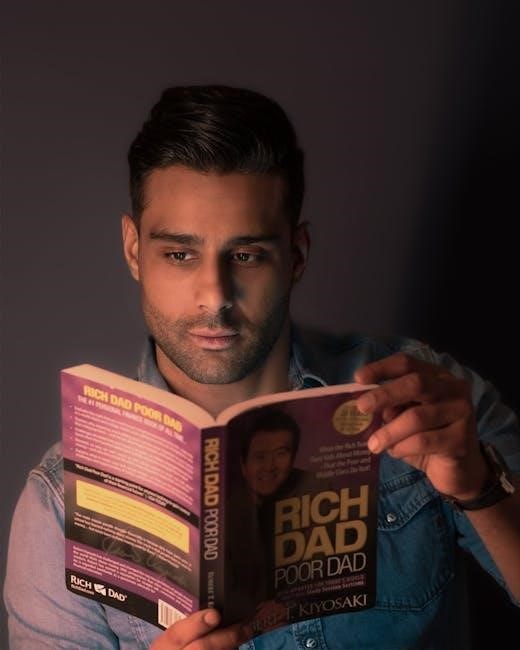
Beyond the PDF: Additional Resources
Rich Dad Poor Dad’s official website offers free reports and resources. Explore audiobook options, related books by Robert Kiyosaki, and engage in community forums for deeper insights!
The Rich Dad Website & Free Reports
Rich Dad Poor Dad’s official website, www.richdadbooki.com, serves as a central hub for further learning and resources. Visitors can access a complimentary audio report titled “What My Rich Dad Taught Me About Money,” offering a valuable introduction to Kiyosaki’s core financial principles.
The website extends beyond this initial free offering, providing a wealth of articles, blog posts, and educational materials designed to reinforce the concepts presented in the book. It’s a dynamic platform where readers can delve deeper into topics like asset acquisition, financial independence, and overcoming common money myths.
Regularly updated content ensures that the information remains relevant and applicable to today’s economic landscape. The site also promotes Kiyosaki’s other works, seminars, and investment opportunities, creating a comprehensive ecosystem for those committed to building wealth and achieving financial freedom. Exploring this online resource is a natural extension of reading Rich Dad Poor Dad.
Audiobook Options and Accessibility
For those who prefer auditory learning, Rich Dad Poor Dad is readily available as an audiobook. This format allows listeners to absorb Kiyosaki’s insights during commutes, workouts, or other activities, maximizing learning opportunities. Multiple platforms offer the audiobook, including Audible, Amazon, and other digital retailers, providing flexibility in access and pricing.
The audiobook is narrated by various voice actors, each bringing their own interpretation to Kiyosaki’s narrative. This can enhance the listening experience and cater to different preferences. Accessibility features, such as variable playback speed, are often included, allowing listeners to adjust the pace to their comprehension level.
Combined with the readily available PDF versions, the audiobook format broadens the reach of Rich Dad Poor Dad, making its financial wisdom accessible to a wider audience. It’s a convenient and engaging way to revisit key concepts and reinforce learning.
Related Books by Robert Kiyosaki
Beyond Rich Dad Poor Dad, Robert Kiyosaki has authored a series of books expanding on his financial philosophy. “Cashflow Quadrant” explores different ways to generate income – employee, self-employed, business owner, and investor – and encourages readers to move towards the right side. “The Millionaire Mind” delves into the psychological barriers to wealth, offering strategies to overcome limiting beliefs.
“Guide to Investing” provides a more detailed roadmap for building wealth through real estate and other investments, building upon the foundational principles established in Rich Dad Poor Dad. “Rich Dad’s Guide to Financial Freedom” offers a step-by-step plan for achieving financial independence.
These books, often available as PDF downloads alongside the original, create a comprehensive learning system. They offer practical advice and actionable strategies for those seeking to improve their financial literacy and build lasting wealth, complementing the core lessons of his initial breakthrough work.
Community Forums and Discussions

The impact of Rich Dad Poor Dad extends beyond the book itself, fostering a vibrant online community. Numerous forums and discussion groups are dedicated to Kiyosaki’s teachings, providing a platform for readers to share experiences, ask questions, and learn from one another. These communities offer valuable support and accountability on the path to financial freedom.
Platforms like Reddit host active subreddits focused on personal finance and investing, where discussions frequently revolve around the book’s principles. Facebook groups also provide spaces for connecting with like-minded individuals. Many websites offering the PDF version also host comment sections for discussion.
Engaging in these forums can significantly enhance understanding and application of the book’s concepts, offering diverse perspectives and practical insights. It’s a great way to stay motivated and learn from the successes and challenges of others.